Choosing between private vs small group soccer training comes down to the kind of help your child needs. One-on-one lessons give a coach more time to address an individual player’s technique. Small groups add teammates, opponents, and decisions that are harder to recreate with one player alone.
For families looking for youth soccer training on Long Island, the best choice is the format that addresses a clear development goal and fits alongside school and club commitments. Here is how to compare the options before booking.
Private vs small group soccer training: a quick comparison
| Training format | Best starting point when… | What to check |
|---|---|---|
| Private training | Your child needs detailed help with a specific skill, position, or confidence issue. | How the coach identifies priorities and builds realistic challenges. |
| Private group training | A few teammates or friends want a customized focus together. | Whether the players’ levels and goals make a workable group. |
| Small group drop-in clinics | Your player wants additional coached repetitions and competitive practice. | Age and ability grouping, current availability, and session focus. |
These options supplement team practice rather than replace it. Team sessions still provide the shared tactics, relationships, and match preparation your child needs with their club.
When private soccer training is the better fit
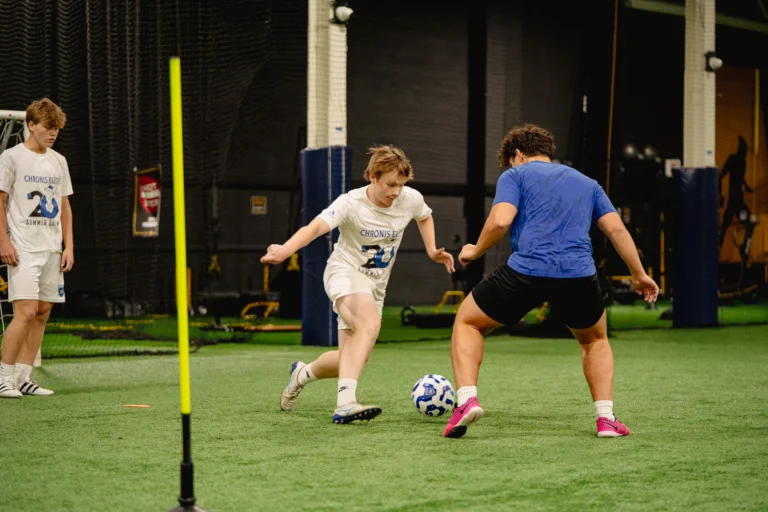
A private lesson is useful when the coach needs time to observe a player closely, explain a detail, demonstrate it, and adjust the challenge without managing several other players. Chronis Elite’s personal soccer training is built around individual goals and current development needs.
A specific technical detail needs attention
Imagine a player whose first touch repeatedly takes the ball into pressure. A focused session can work through body position, the receiving foot, the direction of the touch, and scanning before the pass arrives. Repetition matters, but the coach should also introduce choices and pressure so the skill has a purpose in a game.
Your child needs a quieter learning environment
Some players find it easier to ask questions or rebuild confidence with a coach before practicing in a group. That does not mean they should stay in private training indefinitely. The next step may be using the same skill with peers once the player is comfortable.
Position-specific decisions need more detail
Individual work can address how a player receives between lines, moves to create a passing angle, or prepares to finish. Ask how the session will connect those details to the situations your child actually encounters with their team. Avoid choosing a program solely because a drill looks difficult.
If you are deciding whether additional individual coaching is justified, read our guide to when private soccer training is worth it.
When small group soccer training is the better fit
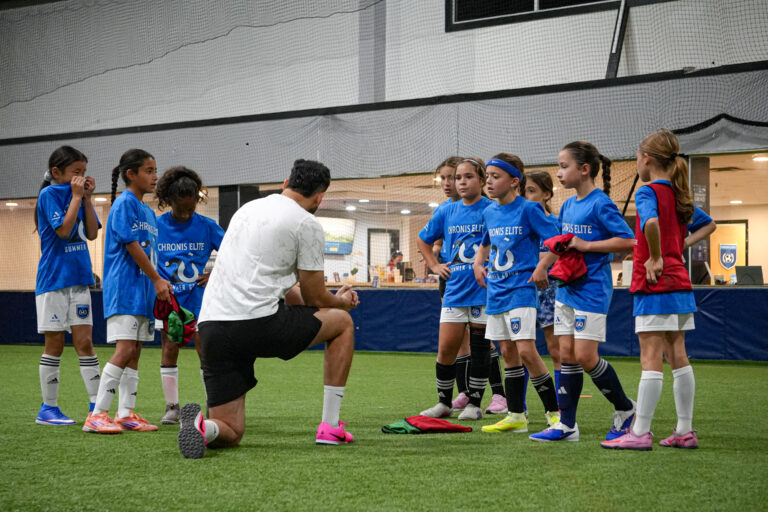
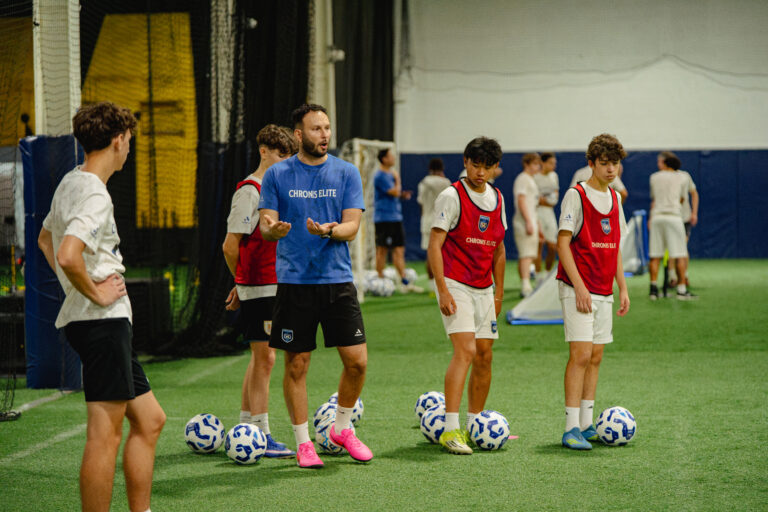
Small groups are valuable when players need to use their skills around other people. A pass involves a receiver. A first touch changes with an approaching opponent. Supporting a teammate requires noticing space and moving at the right time.
A well-run group gives players meaningful involvement, suitable challenges, and feedback they can act on. Small numbers alone are not enough. Look for how much each player participates and whether the coach adjusts tasks for different abilities.
- Your child needs practice making decisions under realistic pressure.
- Your player enjoys learning alongside peers and responding to competition.
- Your child can perform a skill in a drill but struggles to use it in games.
- You want extra development without taking away the role of club training.
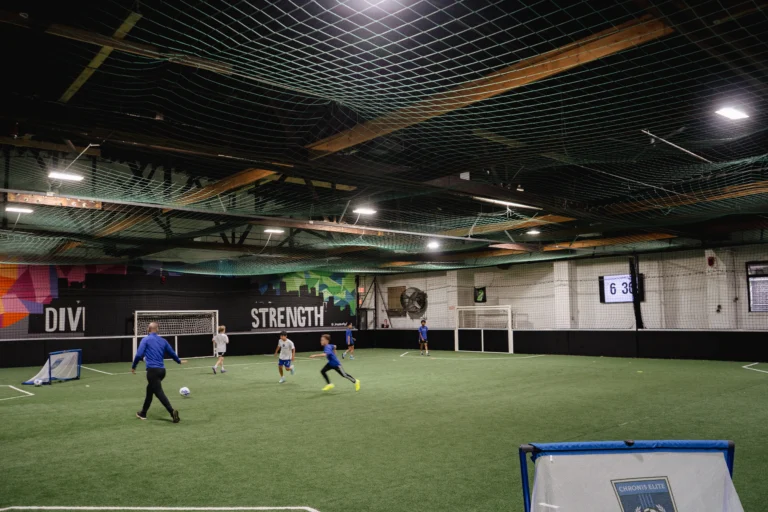
Chronis Elite’s small group drop-in soccer clinics offer structured supplemental training. Check the current age grouping, schedule, and location rather than assuming every session is suitable for every player.
Not sure which format your player needs?
Tell the Chronis Elite team your child’s age, team level, and one or two goals. We can help you explore an appropriate training option and confirm current availability.
Private group training vs drop-in clinics
Private group training and drop-in clinics both involve several players, but they solve different scheduling and development needs.
Private group training starts with a group you already have, such as teammates or friends. Sessions can be customized around shared goals. For example, a group might want to work on receiving and combination play, technical confidence, or decisions in small-sided situations. The players should still be compatible enough in age, level, and motivation for everyone to benefit.
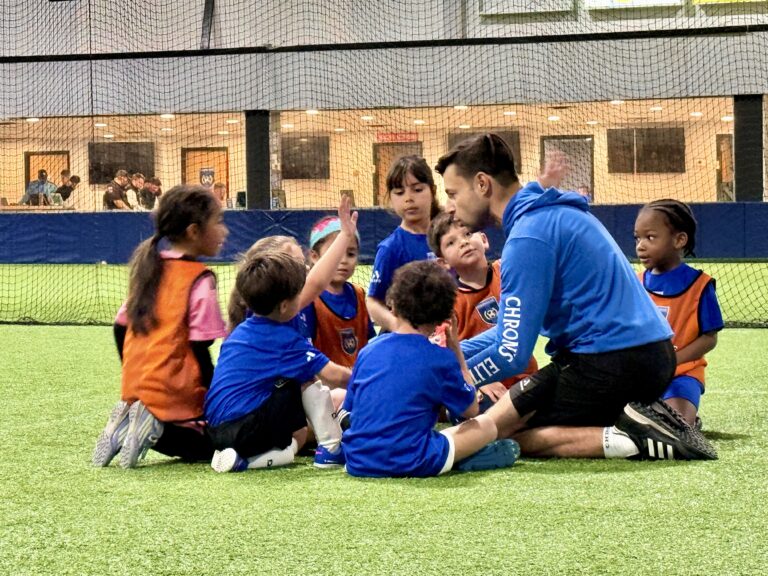
Drop-in clinics are existing sessions that families can join when an appropriate place is available. They can be a practical way to experience coach-led group development without first organizing a group yourself. Ask about booking requirements and availability.
How to choose without paying for the wrong fit
- Define the problem. “Improve soccer” is too broad. “Receive with more control when a defender is close” gives the coach a useful starting point.
- Include your child. Ask what feels difficult in games and what they enjoy learning. A format they engage with is easier to sustain.
- Watch the coaching. Look for clear demonstrations, specific feedback, active participation, and age-appropriate challenges.
- Check the full schedule. Consider club sessions, games, travel, and school before adding another commitment.
- Agree on what progress means. Review the targeted skill and its use in games rather than expecting a guaranteed result after a set number of lessons.
Budget matters too. Compare the coaching attention, session purpose, group suitability, and total commitment rather than price alone. Our soccer training cost guide for Long Island parents explains what to ask before committing.
Can your child combine private and group training?
Yes, when each session has a clear purpose. A coach might introduce a receiving technique individually, then help the player apply it in group exercises and competitive situations. Club practices and matches provide another opportunity to use the same idea.
Combining formats is not automatically necessary. Start with the priority that matters most and review whether the training is helping. Adding sessions without a reason can make the schedule harder without improving the learning experience.
Choosing a convenient Long Island or Queens location
A training plan is easier to maintain when travel is realistic. Families in Nassau County can explore soccer training in West Hempstead. Queens families can review Chronis Elite’s Long Island City location. Confirm the format, coach availability, and session details for your preferred venue before booking.
Frequently asked questions
Is private soccer training better than group training?
Neither is better for every player. Private training offers concentrated individual attention. Group training introduces more interaction and competition. Choose according to your child’s current goal, learning preferences, and the quality of the coaching.
Is semi-private soccer training the same as private group training?
Providers use these terms differently. Both can describe customized coaching for a small number of players. Ask how many players will attend, who organizes the group, how players are matched, and how the session is tailored.
Can beginners join small group soccer training?
They can benefit from a suitable group, but the level and pace need to match their experience. Ask which session supports their age and starting ability. An advanced group is not automatically the right place for a beginner.
How many private lessons will my child need?
There is no universal number. A coach should identify a starting goal, explain the plan, and review progress with you. Avoid promises that a particular number of sessions guarantees selection, playing time, or a specific competitive level.
Find the right next step for your child
Looking for private or small group soccer training on Long Island or in Queens? Contact Chronis Elite with your player’s age, goals, and preferred location. Ask about individual coaching, a customized group, or current drop-in clinics.