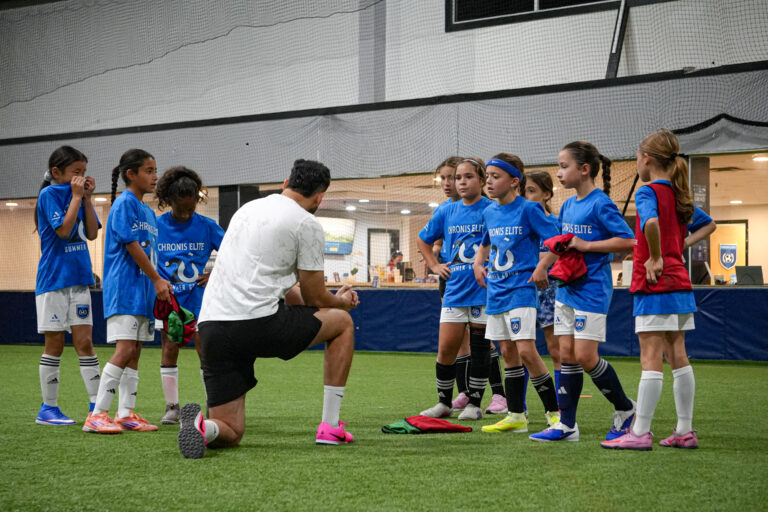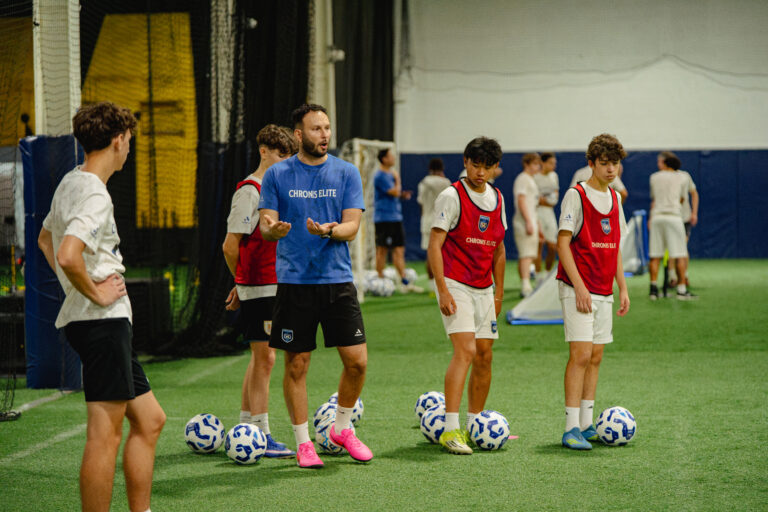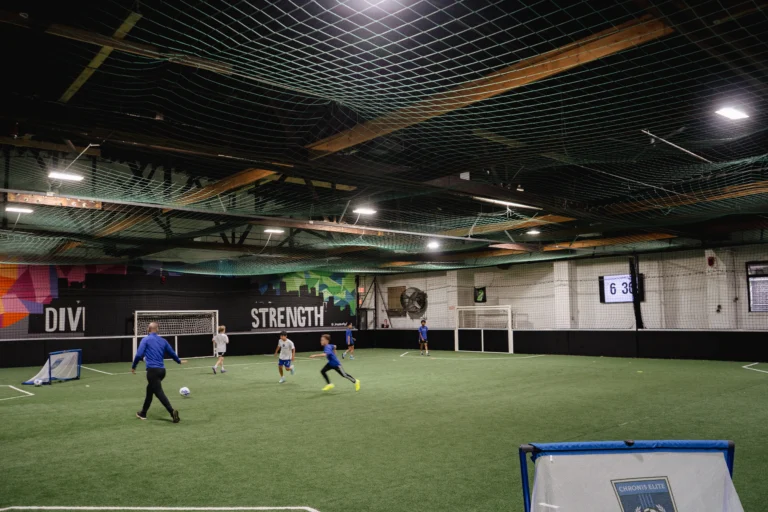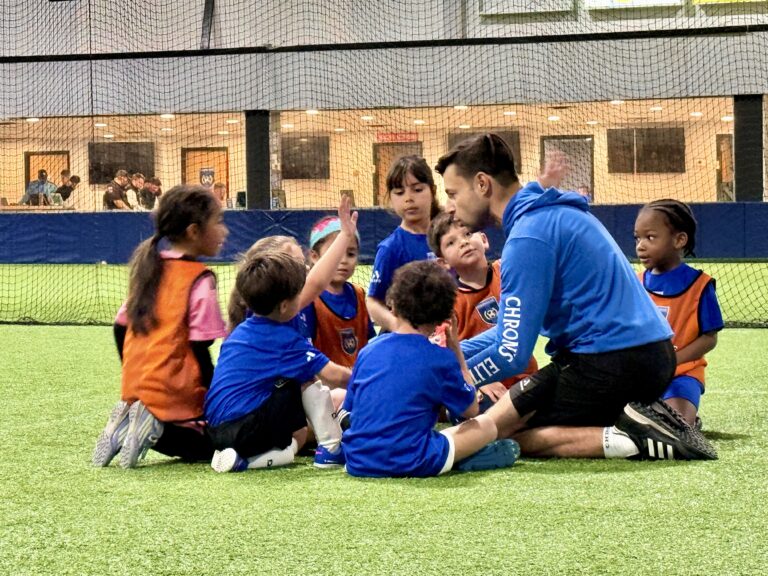
Quick answer: Private soccer training can be worth it when a player is motivated, the coaching is built around a clear development need, and the work connects to what happens in games. It is less valuable when sessions are generic, progress is not reviewed, or a child is simply being asked to train more without a purpose.
For families across Long Island, Queens, New York City, and Westchester, the real question is not whether private training is automatically “good.” It is whether the right coach, format, and training plan can help your child develop more effectively than team practice alone.
Why team practice does not always solve individual needs
Team training is essential. Players learn positioning, combination play, team principles, communication, and how to perform within a group. But a team coach must divide attention among many players and prepare the entire squad for competition.
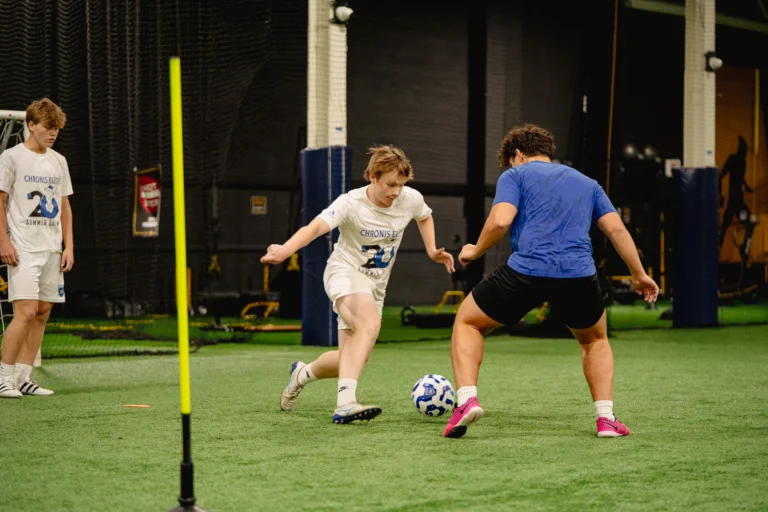
That makes it difficult to stop repeatedly and rebuild one player’s first touch, body position, weaker foot, finishing mechanics, scanning habits, or confidence in a specific situation. A quality private session creates time for those details without replacing the team environment.
When private soccer training is worth it
Private training tends to provide the best value in the following situations.
1. Your child has a specific development goal
A focused goal gives every session a purpose. That goal could be improving the first touch under pressure, becoming more confident on the weaker foot, finishing more consistently, preparing for a new position, or making faster decisions in possession.
The coach should be able to explain what the player is working on, why it matters in matches, and how the exercise will become more challenging over time.
2. The player wants extra coaching
Motivation matters more than simply adding another session to the calendar. A player who is curious, engaged, and willing to practice between sessions is much more likely to benefit than a player who already feels overloaded.
Private training should help a young player feel more capable and connected to the game. It should not turn soccer into another obligation.
3. Feedback is individual and immediately usable
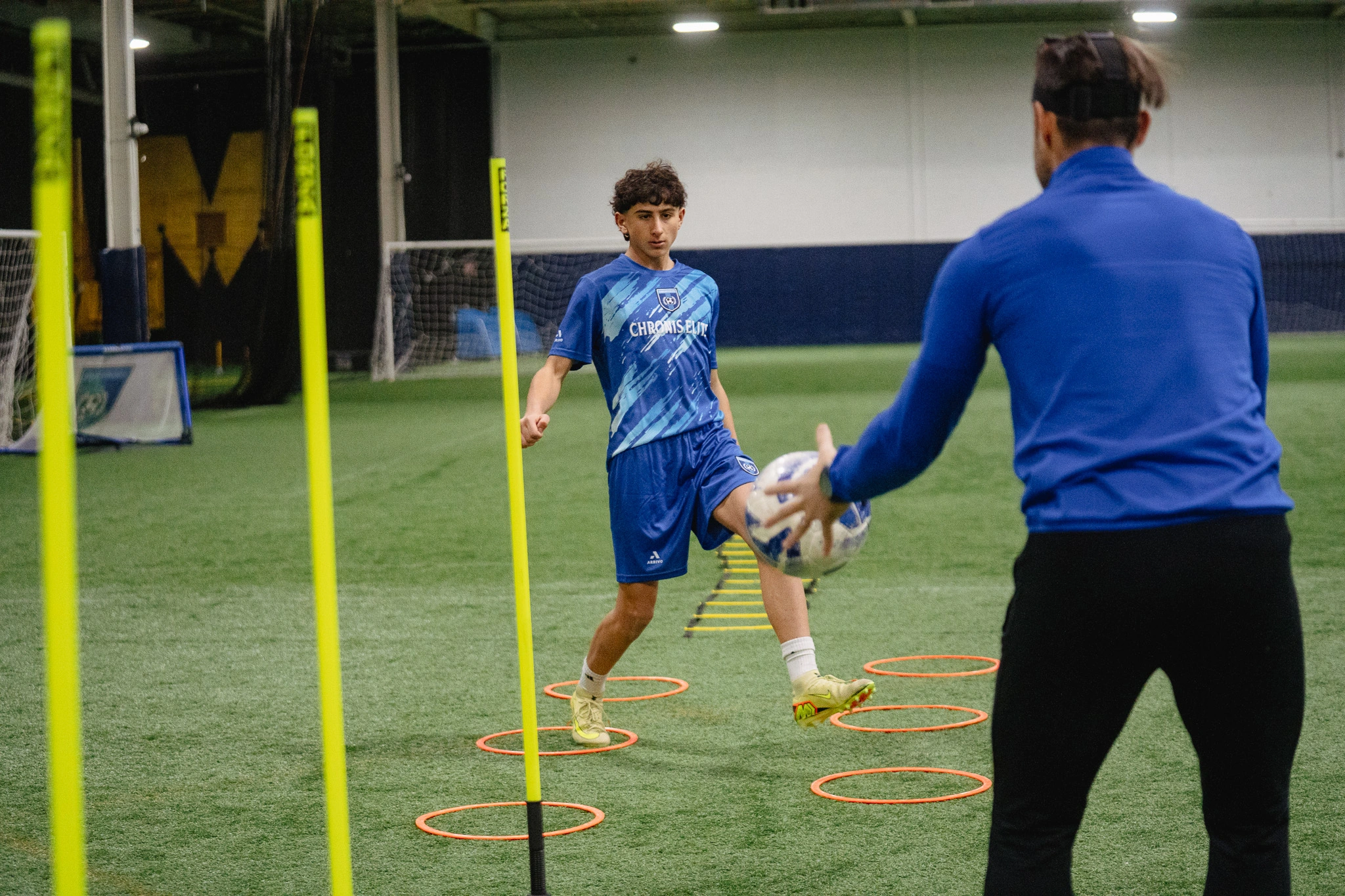
Useful feedback is specific. Instead of saying “take a better touch,” the coach might adjust the player’s body angle, starting position, scanning timing, or choice of foot. The player then gets enough repetitions to understand the correction and apply it at game speed.
4. Training includes decisions, not only isolated technique
Ball mastery and repetition have a place, especially when rebuilding technique. But soccer is a decision-making game. Strong private soccer training gradually adds direction, pressure, visual cues, time limits, and realistic choices so the skill can transfer to competition.
5. Progress is reviewed over time
Progress should be visible in more than a highlight video. Parents and players should understand what has improved, what still needs work, and what the next phase of development will address. Match performance, player confidence, training habits, and technical consistency all provide useful signals.
Want a training plan built around your player?
Chronis Elite offers personal soccer training for players who need focused, individual coaching. Tell our team about your child’s age, current level, and goals, and we will help you identify the most suitable next step.
When private training may not be the right choice
An honest evaluation also includes the situations in which one-on-one coaching may not offer the best return.
- The player is not interested. More training is unlikely to help if the child is mentally tired or participating only because an adult wants it.
- The sessions are generic. Running the same drills for every player misses the main advantage of individual coaching.
- There is no connection to game performance. A move that looks impressive without pressure may not help a player solve real match situations.
- The weekly load is already too high. Development requires an appropriate balance of training, competition, recovery, school, and life away from soccer.
- The player mainly needs competitive interaction. In that case, private group soccer training or a small group clinic may provide a better mix of individual attention and live decision-making.
Private, private group, or small group training?
The best format depends on the player’s objective.
- Private training: Best for highly individualized technical work, confidence building, position-specific details, and a plan centered on one player.
- Private group training: Best for teammates or a small group with shared goals who want customized coaching plus competitive exercises.
- Small group drop-in training: Best for flexible supplemental work, more ball contacts, and game-realistic repetition without committing to a private program.
Many players benefit from using different formats at different stages. A player may begin with individual work to correct a technical issue, then move into a small group to apply the improvement under pressure.
How to choose a private soccer coach
Before committing to a program, ask questions that reveal how the coach thinks about development.
- How will you evaluate my child before building the plan?
- How will the sessions connect to my child’s position and match demands?
- How do you progress an exercise once the player becomes comfortable?
- How will you communicate progress to the player and parent?
- How do you balance technical repetition with decision-making and pressure?
- What should the player practice independently between sessions?
Look for clear answers rather than guarantees. No responsible coach can promise a roster spot, scholarship, or a specific competitive outcome. The coach can promise a thoughtful process, appropriate standards, honest feedback, and a training environment designed to help the player improve.
How often should a youth player train privately?
There is no single schedule that fits every player. Age, club workload, match schedule, school commitments, development goals, and recovery all matter. For some players, a focused weekly session with purposeful work between sessions is enough. Others may use a short training block before tryouts or during an off-season period.
The right question is not “How much extra training can we add?” It is “What is the smallest effective amount of focused work that helps this player improve while continuing to enjoy the game?”
What results should parents expect?
Useful early signs can include better training habits, more confidence attempting a skill, improved control in familiar situations, and a clearer understanding of what to do next. Match-day change may take longer because the player must recognize the situation and execute under pressure.
Private soccer training is not a shortcut. It is a way to make development more precise. The strongest results usually come when individual coaching complements team practice, games, independent play, and appropriate rest.
Private soccer training in Long Island and New York
Chronis Elite works with youth players through multiple training formats and soccer training locations serving families across Long Island, Queens, and the greater New York area. Our approach considers technical, tactical, physical, and cognitive development instead of treating every player the same.
You can also review all available youth soccer training programs to compare individual, group, performance, and seasonal options.
Frequently asked questions
Is private soccer training worth it for beginners?
It can be, especially when a beginner needs a patient introduction to ball control, movement, and confidence. However, a fun small group may be more suitable for a child who is still discovering whether they enjoy soccer.
What age should private soccer training start?
Readiness matters more than a fixed age. The player should be able to engage with the coach, enjoy focused practice, and benefit from individual feedback. Younger children usually need shorter, varied, and play-based activities.
Does private training replace team practice?
No. Team practice develops communication, tactical relationships, and collective decision-making. Private coaching is most effective as supplemental development.
How long does it take to see improvement?
The timeline depends on the skill, the player’s starting point, training consistency, independent practice, and opportunities to use the skill in games. A coach should set realistic checkpoints rather than promise instant results.
Is one-on-one or small group soccer training better?
One-on-one training provides the most individual feedback. Small groups add teammates, opponents, pressure, and more realistic decisions. The better option is the one that matches the player’s current development goal.
The bottom line
Private soccer training is worth it when it solves a real player need, respects the child’s motivation and workload, and follows a progressive plan. The value comes from relevant coaching and better learning—not simply from adding more hours.
If your child wants more focused support, contact the Chronis Elite team. We can discuss the player’s goals and help you choose between personal training, private group training, or a small group program.