If you are wondering how to choose a soccer academy for your child, start with what happens during training. A strong name, an impressive facility, or a competitive label tells you less than the coaching your player receives each week.
For Long Island parents comparing youth soccer programs, the key questions are practical: Will my child receive useful feedback? Is the group appropriate? Does the training develop decisions as well as technique? Can we maintain the schedule? This guide gives you a clear way to compare programs before registering.
First, decide what you need from a soccer academy
The word “academy” can describe very different programs. Some are competitive clubs with teams and league commitments. Others offer supplemental player development, private lessons, clinics, or camps alongside an existing club. A soccer school combining academics and athletics is a different commitment again.
Before comparing providers, decide whether you want a team to join or additional coaching for a player who already has a team. Then identify one or two priorities, such as a more reliable first touch, improved decision-making, technical confidence, or individual attention. A clear goal makes it easier to assess whether a program actually fits.
How to choose a soccer academy: seven things to assess
1. Coaching that explains and demonstrates
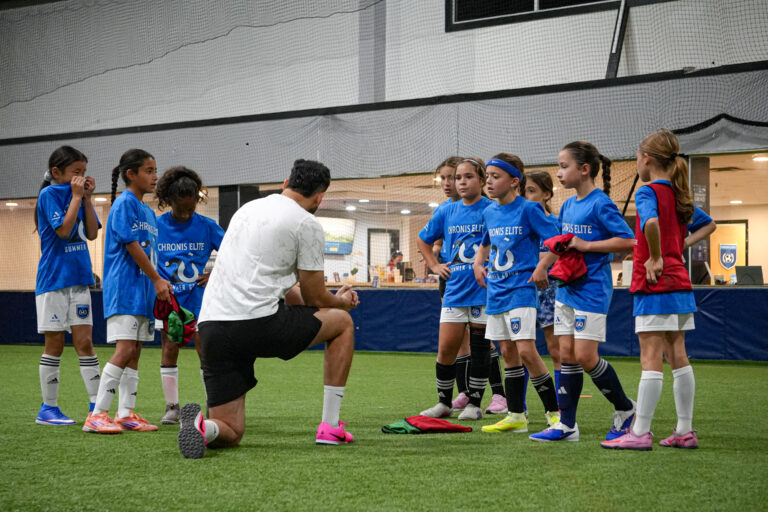
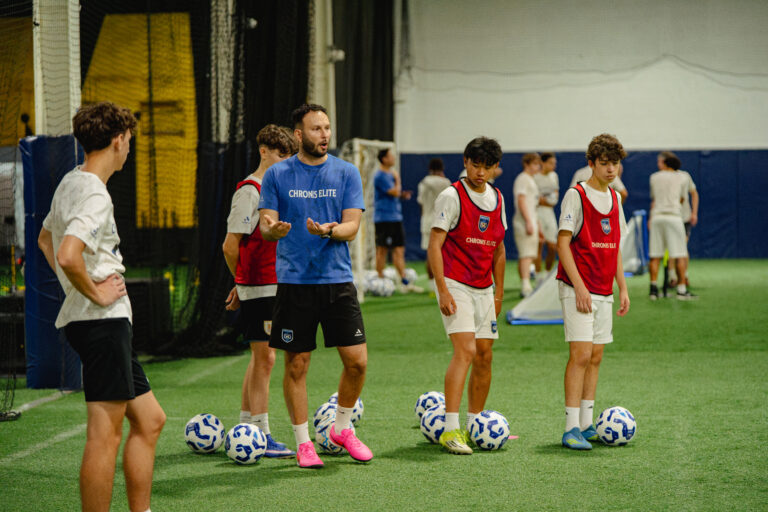
Look for a coach who can explain the task simply, demonstrate the detail, observe the player, and offer a correction the child understands. Encouragement matters, but “work harder” is not a substitute for useful instruction. Good feedback should help your child know what to change on the next attempt.
Ask about the coach’s relevant experience and qualifications, then watch how that experience translates into teaching. A playing background alone does not show how well someone works with children. When considering Chronis Elite, you can meet the coaching team before discussing the right program.
2. Suitable age and ability grouping
Children learn better when the challenge is appropriate. A beginner may need time to understand a task and build comfort with the ball. An experienced player may need less time, more pressure, and more complex choices. Ask how the provider groups players and what happens when a child needs an easier or harder variation.
Do not assume the group with the oldest or strongest players is automatically the best choice. Your child should be involved enough to learn, with room to attempt skills and recover from mistakes.
3. Meaningful touches and active participation
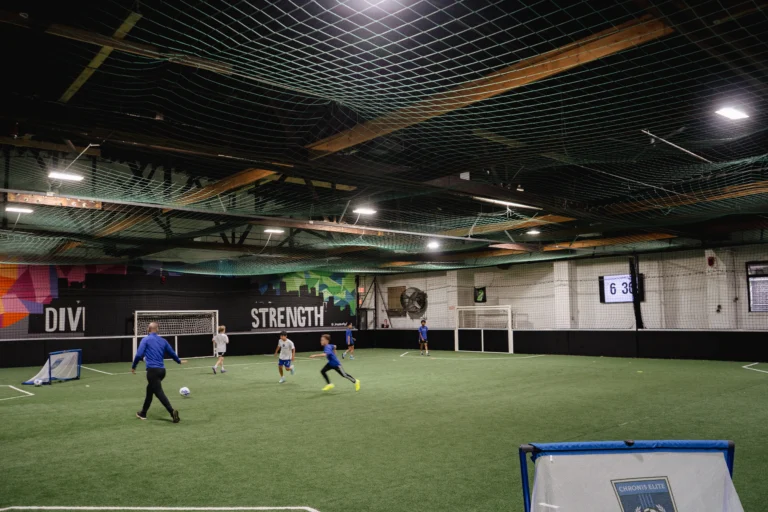
Watch how much of a session each child spends participating rather than waiting. Are players receiving, passing, dribbling, moving, and deciding? Does the coach organize the space so everyone has a role? A smaller group can support involvement, but the session design still determines how useful that time is.
For a player who needs additional coached practice, small group soccer clinics may be a starting point. If a specific issue needs closer attention, individual soccer coaching may be more appropriate.
4. Technique connected to real decisions
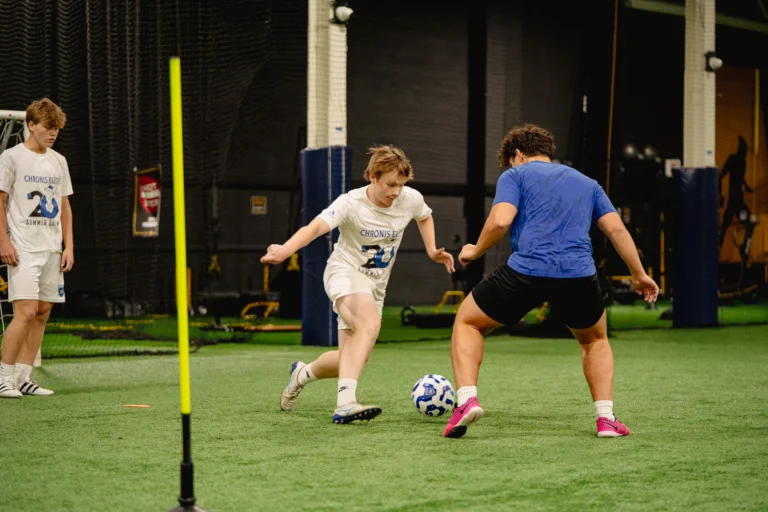
Technical repetition has a purpose when players understand where and when to use the skill. Look for a progression from learning the movement to applying it with teammates, opponents, direction, or time pressure. The activity should help the player read a situation and make a choice, not simply follow a memorized route.
For example, receiving practice can include noticing a defender and choosing which way to turn. Passing practice can include finding a teammate and moving to support them. Ask the coach what a task is designed to help players do in matches.
Want help choosing the right development program?
Tell Chronis Elite your child’s age, current level, club schedule, and main goals. Our team can help you explore a suitable option and confirm availability at your preferred location.
5. A clear development focus and honest expectations
Ask what the coach will prioritize first and how you will review it. Progress may appear in a player’s consistency, willingness to receive the ball, ability to recognize a situation, or use of a targeted skill in games. It is more useful to track those changes than to judge development from a highlight clip alone.
Be cautious about promises of guaranteed team selection, scholarships, or rapid transformation. A responsible program can explain its methods and development goals without promising outcomes it cannot control.
6. A positive, professional environment
Pay attention to how coaches respond when players struggle. Clear standards and appropriate competition can coexist with patience and respect. Your child should understand expectations without feeling afraid to ask a question or make a mistake.
Before registering, ask about supervision, safeguarding procedures, coach screening, emergency arrangements, and how parents raise concerns. These are questions to ask every provider, not assumptions to make from a website. Also ask your child how they felt about the session and whether they understood the feedback.
7. A schedule and commitment your family can sustain
A program only works if your family can attend consistently. Check the actual venue, session timing, travel, registration terms, cancellations, and any additional costs. Consider club practices and matches when adding supplemental sessions.
For Nassau County families, Chronis Elite’s West Hempstead training location provides a local starting point to explore. If Queens is more convenient, review soccer training in Long Island City. Confirm the current program details for the location you plan to use.
Questions to ask before you register
- Is this a club team program or supplemental training alongside our existing club?
- Which age and ability group would you recommend for my child, and why?
- Who will coach the sessions, and how do they provide individual feedback?
- What will the player work on first, and how will we review development?
- How much of the session involves active practice and game-like decisions?
- What are the total costs, booking terms, and cancellation arrangements?
- What supervision and safeguarding procedures are in place?
Write down the answers while comparing providers. Clear, specific responses are more helpful than claims that a program is simply “elite” or “the best.”
Compare value, not just the session price
An inexpensive session that leaves your child waiting or confused may offer less value than a focused session that addresses the right need. Equally, a higher price does not automatically mean better coaching. Compare purpose, suitability, participation, feedback, and the full commitment.
Use our Long Island soccer training cost guide to prepare your pricing questions. If you are considering one-on-one lessons, our guide to whether private soccer training is worth it can help you assess that decision separately.
Where Chronis Elite fits into your comparison
Chronis Elite’s player-development approach brings together technical, tactical, physical, and mental aspects of soccer. Families can explore individual coaching, small group training, and camps according to their player’s needs and the programs currently available.
Start by reviewing the Chronis Elite soccer training services, then discuss the appropriate format with the team. If your child already plays for a club, explain their existing commitments so the conversation focuses on development that complements their team experience.
Frequently asked questions
What is the difference between a soccer academy and a soccer club?
The terms overlap, and providers use them differently. A club commonly involves a team and competition commitments. An academy may refer to that structure or to supplemental development sessions. Ask what registration includes and whether joining affects your child’s existing team.
Should beginners join a youth soccer academy?
A beginner can benefit from structured coaching when the program offers suitable instruction and grouping. Ask how the coach introduces fundamentals and supports children who are new to soccer. Choose an appropriate starting environment rather than the most advanced label.
How do I know if the coaching is helping?
Agree on a clear development priority and review it with the coach and your child. Look for better understanding and more consistent use of the targeted skill during training and games. Progress differs between players, so avoid comparing only goals scored or team selection.
Can my child train with Chronis Elite while playing for another club?
Chronis Elite offers supplemental player-development services that families can explore alongside club training. Contact the team with your child’s club schedule, age, and goals to discuss appropriate options and current availability.
Take the next step with a clear plan
Looking for youth soccer development on Long Island? Contact Chronis Elite to discuss your player’s goals, compare the available programs, and find a practical starting point for your family.