By Andreas Chronis, Founder of Chronis Elite Soccer
When parents ask me about private vs small group soccer training, I start with the player’s development goal, not the format. Private training can be valuable for an advanced player working on a very specific detail. But soccer is not played in a bubble. For many players, small-group soccer training creates the game-like pressure, decisions, and feedback they need to improve how they play.
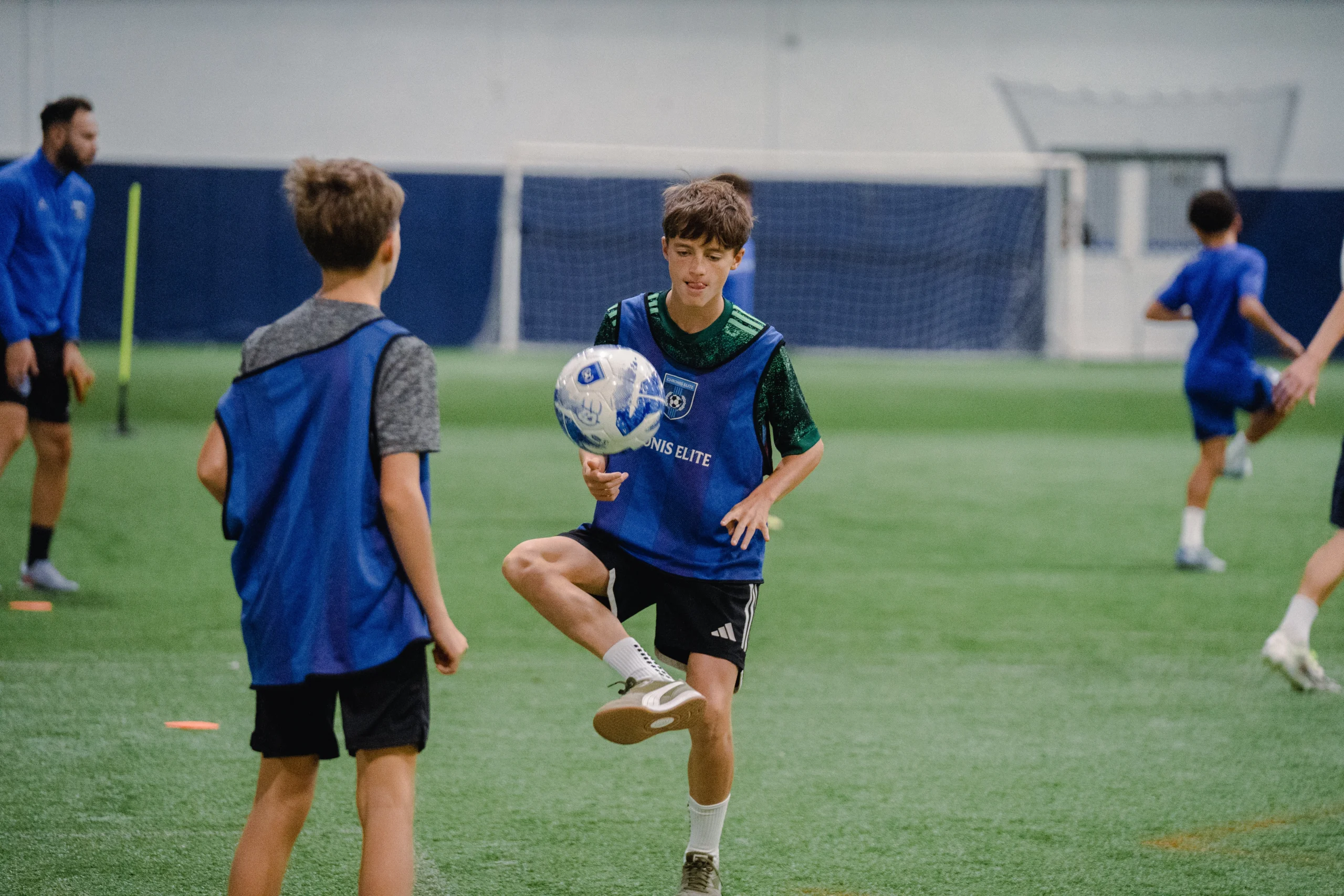
At Chronis Elite Soccer, our small groups are designed to help players apply technique and understand tactics while interacting with teammates and opponents. Here is how I explain the difference to families considering youth soccer training on Long Island and in the New York City area.
The key difference: practice decisions, not just movements
In a match, a player has to read the opponent, locate teammates, judge available space, and act within limited time. The right choice changes from moment to moment. A player’s technical ability matters, but so does recognizing when and how to use it.
A one-on-one session can isolate a specific technical or tactical component. A well-designed small group adds the relationships that make soccer a decision-making game: who is applying pressure, where the space is, what a teammate is doing, and what option is available next. Those changing conditions create repeated opportunities for players to make a choice, execute it, and learn from the result.
How we make a small group personal
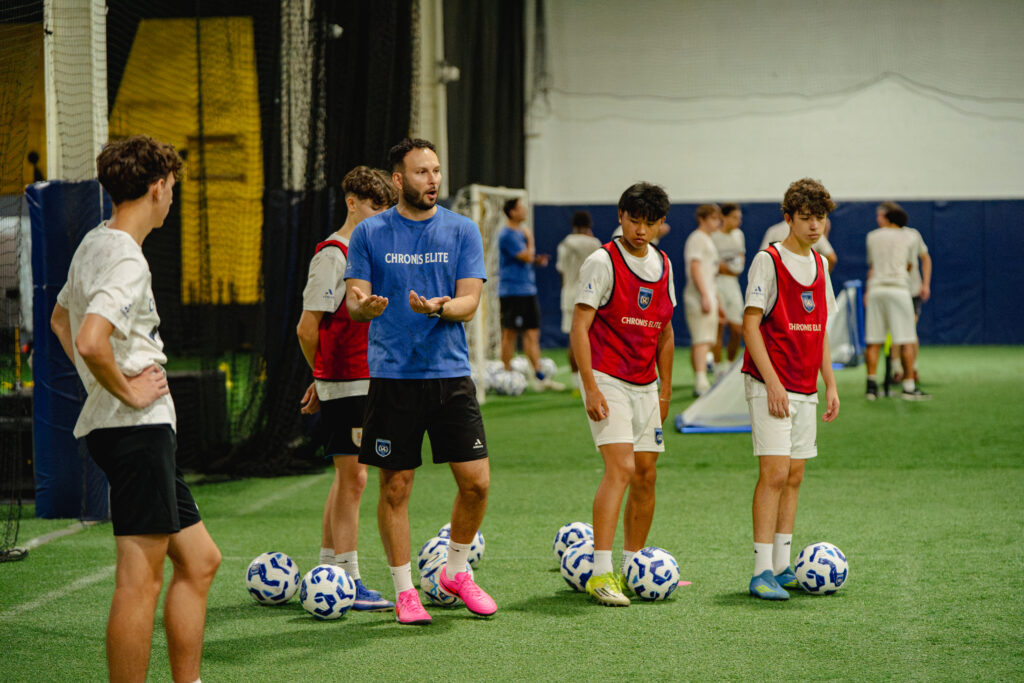
“Group training” should not mean that a player disappears into the crowd. At Chronis Elite Soccer, our player-to-coach ratio is 8:1. Coaches assess each player’s strengths and areas to develop during every session, and each coach is expected to provide at least two direct touchpoints addressing a player’s individual needs in that session.
That feedback might be a correction to a player’s body shape before receiving, a cue to scan before the ball arrives, or a question that helps the player recognize a better option. Our aim is to connect the technical detail to the decision the player is trying to make, not just stop the session to repeat instructions.
We are also available to speak with players and families after training. Players enrolled in our monthly memberships receive an Individual Development Plan (IDP), so the family and coaching team have a clearer reference for the player’s development priorities.
What a typical session works on
Sessions include technical fundamentals such as dribbling, passing, receiving and controlling the ball, and shooting. Players first work under more controlled pressure, then move into game forms that can range from 1v1 to 5v5. The exact activity depends on the session and the players in it.
That progression matters. Repetition can help a player refine a movement, but the purpose is to use the skill when a defender, teammate, or changing space affects the next action. In a small group, coaches can observe those choices and give specific feedback while players continue to compete and interact.
Who benefits most from small-group soccer training?
Small-group training can suit players who want to improve their technical execution and tactical understanding in game situations. It is especially relevant when a player can perform a skill in a simple drill but needs to make better decisions about when, where, or how to use it around others.
- Players who want more chances to make decisions under time and space pressure.
- Players who need to connect technical work to teammates, opponents, and game situations.
- Players seeking focused coaching and individual feedback within a competitive group.
- Players looking for supplemental development alongside their existing club or town team.
If a child is just beginning to learn how to play and compete with a team, I recommend starting with a PAL league or town team. That gives a beginner a foundation in the group game. Additional training can make sense when the player is ready for more focused technical and tactical development.
Not sure which training format fits?
Tell us your child’s age, current team experience, and what they want to improve. We can help you understand the available options and confirm current session details.
When one-on-one soccer training may be the better choice
Private training can be a good fit for an extremely high-level player who needs to focus on a specific technical or tactical component that may not arise often in a group session. The quality depends heavily on the coach’s knowledge and ability to design and deliver work that is specific to that player.
For example, an individual session may allow a coach and player to spend more time on one targeted action or positional detail. But a private session should not become a string of isolated drills without a link to the player’s actual game. We want the work to answer a real development need, not simply fill an hour.
For a player to benefit from private training, I believe consistency is essential: at least one touchpoint each week across the year. I also recommend pairing it with game analysis. How a player performs in matches should help inform what they work on individually. Families considering one-on-one coaching can explore our personal soccer training and game analysis options.
Small group vs. private soccer training: a practical comparison
| Consideration | Small-group training | One-on-one training |
|---|---|---|
| Best suited to | Players developing technical and tactical decisions in game situations. | Advanced players with a clearly defined individual focus. |
| Practice environment | Players respond to teammates, opponents, space, and time pressure. | The coach can concentrate on one player and a specific development detail. |
| Feedback | At Chronis Elite Soccer, 8:1 ratio and at least two individual-development touchpoints per player each session. | Feedback can be highly specific, provided the coach can design the right session. |
| To make it effective | Choose a group and session that match the player’s experience and goals. | Commit consistently, at least weekly, and use game analysis to guide the work. |
Neither format is automatically superior for every player. The useful question is: what is the player trying to improve, and which environment gives them the right practice and coaching feedback?
Current small-group training options and locations
Chronis Elite Soccer offers different group options across its facilities. Current programs include weekday Morning Grind sessions from 5:30 to 7:30 a.m. in West Hempstead, Long Island City, and New Rochelle; Saturday drop-in training in West Hempstead; and Saturday Chronis JR’s training in Port Washington for players born 2018–2021. West Hempstead offers Holiday Camps during school holidays and extended breaks; New Rochelle does not currently offer Holiday Camps.
Schedules and availability can change, so check the relevant location information and Saturday drop-in clinic details before making plans. If the format or location is not clear, contact us and we will help you find the right next step.
We do not offer free trials because places and coaching capacity are limited. Families can ask about attending a single class before making a monthly or recurring commitment. For me, the best way to judge whether a program is a fit is to see how the session is coached and whether your player feels challenged and supported.
Frequently asked questions
Is small-group soccer training better than private training?
It depends on the player’s needs. Small groups create opportunities to make decisions with teammates and opponents in changing space. Private training is useful for a highly specific individual focus when the coach can design the session well. Choose based on the development goal, not on the assumption that one format is always better.
Do players get individual coaching in a group?
At Chronis Elite Soccer, the player-to-coach ratio is 8:1, and coaches are expected to provide at least two touchpoints addressing each player’s specific needs in every session. Monthly members also receive an Individual Development Plan.
Should a beginner start with small-group training?
For a beginner who is still learning how to play and compete in a group setting, I recommend starting with a PAL league or town team. From there, supplemental training can be considered when it matches the player’s experience and goals.
How often should a player do private training?
There is no universal schedule for every player. For the specific, high-level players who are suited to private training, I recommend at least one consistent weekly touchpoint across the year, supported by game analysis that helps identify what to work on.
See whether Chronis Elite Soccer is the right fit
We are happy to discuss your player’s experience, goals, preferred location, and current availability. Ask us about small-group sessions or a single class before a monthly or recurring commitment.